
On a Sunday night in late October, Pastor David Johnson sat down at his home office desk and opened a spreadsheet. The Sunday morning service had 132 people in it. The Sunday before had 141. The Sunday before that had 134.
He scrolled back column by column, month by month, year by year. The numbers had been doing the same thing for four years.
“I wasn't shocked,” he told me later. “I was just tired. Not of the spreadsheet. Of the prayer. I had been praying the same prayer for two years. God, what are we doing wrong. And every Sunday night I would get on that spreadsheet, and the numbers would tell me He hadn't answered yet.”
David Johnson is 46 years old. He lives in Wichita, Kansas. He has a wife, three kids, and eight years pastoring a non-denominational church that meets in a repurposed retail building on the east side of town.
He is also, as of ninety days ago, the senior pastor of a church that has grown from 138 people on a Sunday to 312. His weekly work hours have dropped from 65 to 51. The bottleneck he removed was himself.
I asked him to explain that. He told me he had been waiting for someone to ask.
The Pastor Who Did Everything Right and Got Nowhere
To understand what happened to David, you need to understand what he was doing before.
David planted New Life Community Church in 2018 with a launch team of twenty-eight people and a borrowed sound system. He preaches every Sunday. He does the visitation, the counseling, the funerals, the weddings, and the late-night phone calls when a family in his church is in crisis. He works between 62 and 68 hours a week and has done so for eight years without a sabbatical.
He was, by any measure, the pastor every small church wants. And he had been stuck at 138 people on a Sunday for four years.
“I would preach Sunday morning, drive home, take the family to lunch, come back for evening service, do the Monday visitation, write next Sunday's sermon, do the marriage counseling on Tuesday and Thursday, run the elders meeting on Wednesday, and try to be home in time to help my kids with homework. That was every week. That had been every week for eight years.”
“I preached well. I prayed. I followed up with every visitor I could remember. I went to every funeral. I sat with people in chemo wards. I did all of it. And the number on the spreadsheet did not move.”
“I thought there was something wrong with me. I genuinely thought maybe God had not called me to this. I started reading articles about whether you can know if your call has expired. That is how dark it got.”
He is also the pastor who, over four years, spent approximately $12,700 trying to grow his church.
He paid $2,400 for three thousand door hangers in 2022, distributed over six Saturdays by volunteers, and got three first-time visitors and zero returning families out of it. He paid $3,100 for two rounds of direct mail to five zip codes in 2023 and got five first-time visitors, one of whom came back twice. He paid a marketing agency $4,500 over three months in 2023 to redesign his website and run social ads. He paid $1,800 to attend a church-growth conference in 2024 and came home with two notebooks of ideas and no system for executing any of them. He spent another $900 over the course of eight months on Facebook boost-posts and could not attribute a single first-time visitor to any of them.
Four years. $12,700. Eleven first-time visitors he could directly attribute to any of it. Same 138 people on a Sunday.
The money he had spent was only half the problem. The other half was quieter. For every first-time visitor David could remember, two or three more Sundays would pass before the next one walked through the door. Traffic was thin. And of the first-time visitors who did walk in, roughly one in eight would come back a second Sunday. Retention was thinner. He was bleeding on both ends of the same problem at the same time. He did not have the language for it yet. He just knew that the number on the spreadsheet was the outcome of two things breaking at once.
The Sunday Night He Stopped Believing In Himself
Before David found his answer, he hit a wall that he describes as the low point of his eight years as a senior pastor.
“It was a Sunday night in late October. We had 132 in service that morning. The Sunday before had 141. I had been on the spreadsheet at the end of every Sunday for four years. My wife usually came in around 10:30 with a cup of tea. That night she came in earlier.”
“She put her hand on my shoulder for about three seconds. She did not say anything. She just left the room. And I sat there for another forty minutes. I prayed out loud, very quietly. The same prayer. God what are we doing wrong. And it was the first time I really thought to myself, maybe He is not going to answer. Maybe this is just my church.”
“That was the moment I gave up. Not dramatically. Quietly. I thought: this is just my church. We are going to be 138 forever. And I am going to be the pastor who tried everything and stayed at 138 for the rest of my career.”
He told me later he almost did not tell his wife what he had been thinking. He was afraid it would sound like he was quitting on her.

The Video He Almost Scrolled Past
David's path to a solution did not begin with a conference or a podcast. It began with a video he almost scrolled past on his phone in bed at 11:01 PM that same Sunday night.
“I had opened Facebook to stop thinking. I wasn't looking for anything. An ad scrolled by with a picture of a pastor in a blue button-down and a sentence about churches stuck between 100 and 200 people. I had been stuck at 138 for four years. He was looking at me. I tapped it.”
“It was a Texas pastor I had never heard of telling his own story. He had taken his own church from 20 people in a rented school cafeteria to over 300 in under two years. And in the video he kept talking about another pastor, in North Carolina, named Jassen Grant, who had doubled his church in less than a year using the same system. Doubled. In less than a year. That was the line that made me actually watch.”

“He said one sentence I could not get out of my head. He said: ‘You do not have a faith problem. You have a systems problem.’”
“I had prayed about my church for four years. The prayer was real. He was not telling me to stop praying. He was telling me the answer to my prayer was going to come through something I had never been taught. God had answered. I just had not known what I was listening for. I sat in bed reading that sentence over and over. By 5:45 the next morning I was walking around my neighborhood with earbuds in, listening to him say it again.”
“He kept saying two words together. Traffic and follow-up. He said the growing side of the local church was two things at once. Getting families in front of the church who had never heard of it. And keeping the ones who walked through the door. He said most stuck churches had both problems and did not know they had both. That sentence stopped me. That was me. That was my church. I had been trying to fix a leak while a second leak was pouring on the other side of the wall.”
“Twenty minutes in, he said something else. He said hard work without a system is just organized chaos. I stopped on the sidewalk. I turned around and walked home. By 7:30 that morning I had a legal pad on my kitchen table and I was drawing what he had described. By 9 AM I had texted our elder chair, Ron, and asked if he could meet on Tuesday night.”
Reader-Only Special
This is the book David read at 11:02 PM on a Sunday night.
Right now, it is available to readers of this article for $4.99. That is 95% off the regular price of $97.
Learn More$4.99 one-time · 365-day money-back guarantee · Instant access · No subscription
What Happened Next: A 90-Day Account
The first thing David did when he sat down at his kitchen table on the Monday morning after was not to redesign his website or launch an ad. It was to build a first-impressions system.
“That was the piece I had never had. Every visitor who walked into my church for eight years walked into a system I had never built. There was no greeter team. There was no follow-up. There was no 48-hour window. If you visited us and never came back, I had no way to know why. That was the first thing that had to change.”
Week 1. David recruited four volunteers to form a guest-welcome team. He printed a one-page first-time-visitor form that took 25 seconds to fill out. He wrote a 48-hour follow-up script. On Wednesday he opened the Facebook ad account the system walked him through step-by-step, uploaded one of four pre-written ad scripts, and set a budget of $10 a day. The ad went live Friday morning. Starting attendance that Sunday: 141.
Week 2. He shipped the second structural change: a two-touch follow-up sequence using the email template the system provided. Every first-time visitor got a personal email from David on Sunday afternoon and a hand-addressed note in the mail by Tuesday. That Sunday, he had eleven first-time visitors. Six of them said, when the welcome team asked, that they had seen the church on Facebook and clicked. Three were prospects who had visited once months earlier and had never been followed up with, now re-engaged by the sequence and back for a second look. Two came from a family in his church who had personally invited their neighbors. Attendance: 144.
“By Wednesday of week two I had already changed more about how my church worked than I had changed in the previous eight years. And I had not stood in the pulpit any differently. I had not changed one word of my preaching.”
Week 3. The Facebook ad had spent $150 across ten days and produced 47 link clicks to the landing page. David tuned the audience settings using the templates the system provided and swapped in a second script. The follow-up team was catching every first-time visitor within 48 hours. Attendance: 139.
Week 4. By Friday the ad had spent $280 total and produced 88 link clicks. Twelve people who had first clicked the ad in the previous four weeks showed up on Sunday. Seven of them stayed for the post-service coffee. Five of them came back the next week. Attendance: 152.
“I told Sarah on Sunday night that something felt different. She said she had noticed. She said she had noticed because I came to bed before midnight for the first time in three years.”
Week 6. The midpoint. David's spreadsheet showed 29 first-time visitors in the previous 30 days, up from a baseline of around 9. The 48-hour follow-up was producing a returning rate he had never seen. Of the 29 first-time visitors, 11 had come back at least once. Attendance: 178.
“I kept waiting for it to stop working. Every tactic I had tried had worked for a week or two and then it stopped. I was waiting for it to stop.”
It did not stop.
Week 8. The Sunday David remembers most clearly. He was preaching out of Romans 12 and he looked up midway through the sermon and saw something he had not seen in three years: the back row of the sanctuary was full. Eleven first-time visitors had walked in that morning. Seven of them came back the next week. Attendance: 219.
Week 10. A first-time visitor named Cameron, a thirty-something father of two who had been coming for three weeks, stopped David in the coffee line and said the sentence David quotes back to me without prompting.
“He said, ‘This is the church we have been looking for. We are done shopping.’ Then he shook my hand and walked out. I walked to my car after the service and I could not get the door open because my hands were shaking. I sat in the driver's seat for about ten minutes before I could drive home.”
Week 12. New Life Community Church averaged 312 people on a Sunday for the four weeks ending late January. The first-time-visitor count for the month was 47. The return rate was 38 percent. The volunteer team had grown from 17 to 41. The number of households giving regularly had grown from 49 to 84. Weekly giving had nearly doubled, from $4,820 to $8,950. David's weekly work hours had dropped from 65 to 51.
“I gained 174 people in 90 days. I lost 14 hours a week from my work week. The numbers do not make sense if you think the way I used to think. They make perfect sense if you think the way I was being asked to think now.”
Why Working Harder Was Making Things Worse
Here is what David's seminary training had not prepared him for.
A church is not a simple effort calculator. It is an adaptive system. When the senior pastor is the system, when he is the only one greeting visitors, the only one doing follow-up, the only one running every ministry, the only one closing the back door, every additional hour he adds to his own week is an hour that produces linear effort and zero structural change.
David had spent most of his pastoral career operating as if church growth were a function of effort.
“I preached harder. I prayed harder. I visited more. I added another program. I added another life group. I added another service. Everything I added was another piece of the load I was carrying. I was the system, and the system had a ceiling. That ceiling was me.”
He believed, on some level, that his job was to be the system. He believed that if he was just present enough, faithful enough, and pastoral enough, the church would grow.
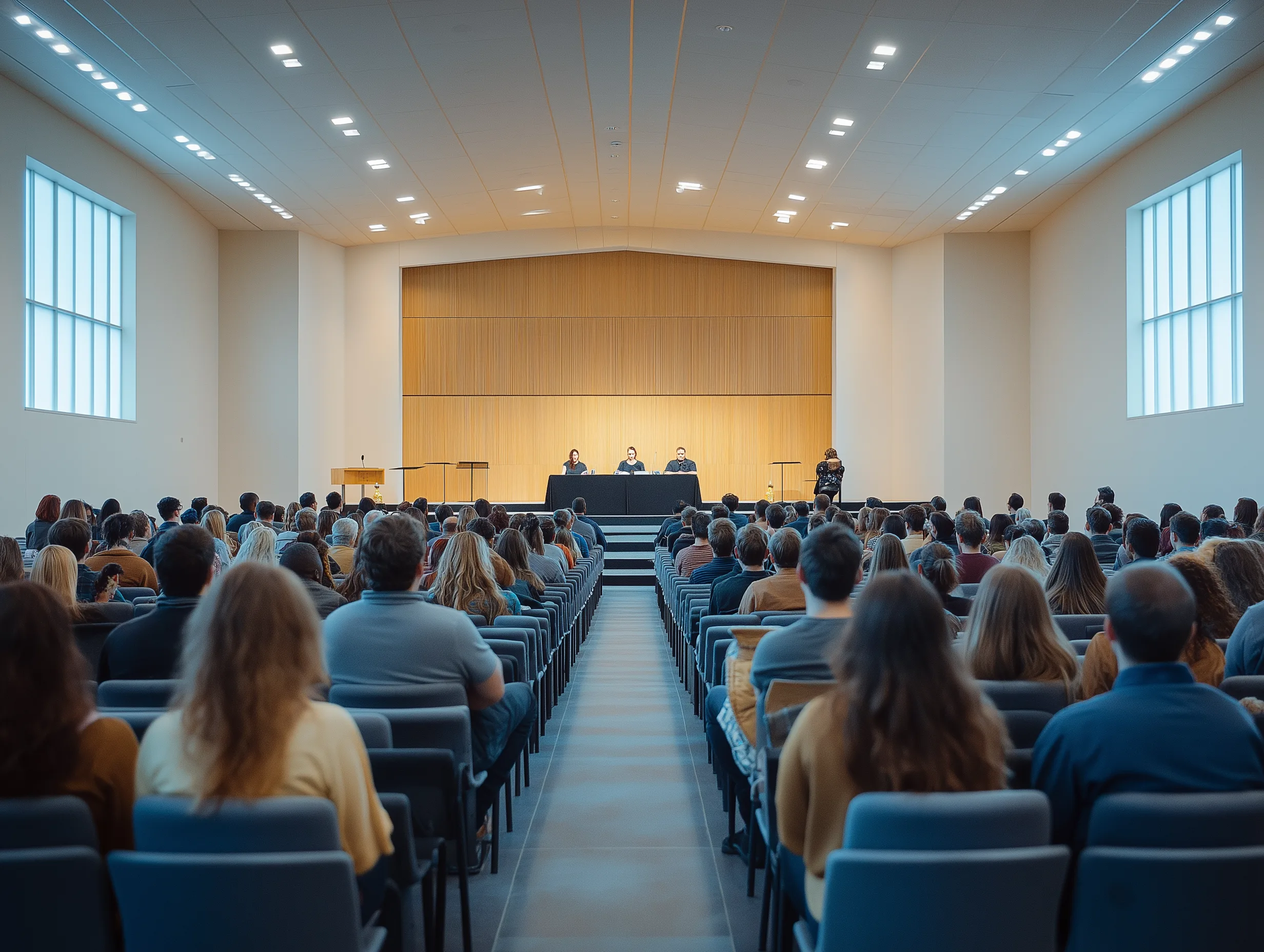
What he had discovered, and what the system he was now implementing was built around, was that the pastor-as-system model breaks at exactly the point where his church had been stuck. Under about 75 people, the pastor can know everyone, follow up with every visitor, and personally hold every relationship. The pastor IS the system at that size, and it works. Between 75 and 150, the same solo-pastor model starts to fail in two ways at once, and the pastor cannot see either of them from inside the pulpit. First, he does not have the bandwidth to get the church in front of the families in his community who have never heard of it. That is the traffic side of the bleed. The seats stay half-empty because the invitation is never made outside the walls. Second, the visitors who do walk in do not have a system waiting to catch them. The pastor cannot follow up with all of them in the 48-hour window that matters. Most of them leave. That is the retention side of the bleed. The pastor adds another sermon series, another life group, another visitation rotation, and the line on the spreadsheet does not move, because the two things bleeding underneath are the two things he has never been taught to build.
The system David was implementing, and the book the Texas pastor had written to teach it, names this exactly.
“He said, you do not have a faith problem. You have a systems problem.”
“When I read that sentence on Tuesday morning of the first week, I closed my laptop and walked outside. I stood in my backyard for fifteen minutes. It was the first time in four years I felt the apology in my chest start to loosen. I realized this was an answer to my prayer. I had been asking for four years, and the answer had been waiting on the other side of one sentence I had never heard. It was someone telling me that the reason for my stuckness was not my fault and not my faith. It was that the growing side of the local church is a real thing you can build, and nobody had ever built it for me, and nobody had ever taught me how. And that I could actually do something about it.”
The Science Behind Why Most Churches Plateau
The 100-to-200 ceiling David hit is one of the most heavily documented structural barriers in American church-growth research.
According to a 2020 Lifeway Research report, roughly 65 percent of churches in the United States have an average weekly attendance under 100. The median Protestant church in America has 65 people in it. The barriers between size brackets are not opinion. They are observable, repeatable, and structural.
Thom Rainer, the former CEO of Lifeway and the founder of Church Answers, has published research showing that first-time guests typically decide within the first ten to eleven minutes of their first visit whether they intend to return. He has separately documented that the most predictive factor in a first-time guest becoming a returning attender is whether the church follows up with that guest within 24 to 48 hours of the first visit. The vast majority of churches in his survey samples do not follow up within that window. Most do not have a system for follow-up at all.
Carey Nieuwhof has written repeatedly about what he calls the pastoral-care ceiling. His observation is direct: “The main reasons churches never pass the 200 attendance mark are not spiritual, they are structural.” He has documented that pastors who insist on being the sole provider of pastoral care effectively cap their own churches at a size determined by their personal capacity.
The Barna Group's 2017 report The State of Pastors found that nearly one in four senior pastors describe the previous year as the most difficult of their ministry. Two of the top three reasons cited were attendance pressure and personal exhaustion. The same study found that the average senior pastor of a church under 200 in attendance works between 50 and 60 hours a week, and that the most common cited barrier to growth is not theology, doctrine, or community context. It is the absence of operational systems for visitor acquisition and follow-up.
David had spent four years assuming his stuckness was either spiritual (his faith) or motivational (his effort). Neither was true. He had been stuck because he had never installed the structural system that turns first-time visitors into long-standing members. Nobody had told him that system existed. Nobody had told him what it was.
The Five Things He Tried Before This One
Before we get to what actually worked, you need to understand what David had already tried. The list will probably sound familiar.
| Tactic | What it promised | What actually happened |
|---|---|---|
| Door hangers (3,000 hung across six Saturdays, 2022) | Cheap, scalable first-time visitor acquisition | Three first-time visitors. None returned. No follow-up system to catch them. |
| Direct mail to five ZIPs, two sends, 2023 | Wider community reach | Five first-time visitors. One family came back twice. Same structural gap. |
| Marketing agency, 3-month contract, 2023 | Done-for-you growth | A new website. No measurable visitor lift. The agency did not understand church context and did not address the underlying structural problem. |
| Church-growth conference + travel, 2024 | Inspiration and a playbook | Inspired for about three weeks. Two notebooks of ideas. No system for executing any of them. |
| Facebook boost-posts, 8 months, 2024 to 2025 | Inexpensive social reach | Page likes. Zero attributable first-time visitors. Boosting posts is not the same as running a structured ad funnel. |
Every tactic on this list has one thing in common. Each one focused on attracting first-time visitors. None of them addressed what happened to those visitors after they walked in the door.
David spent over $12,000 trying to fill a room with people. The room was open. The system to keep the people who walked into it had never been built.
The Pattern David Finally Recognized
Every tactic David tried was designed for a problem he did not actually have. They all assumed the problem was visibility, that the church just needed more first-time visitors. None of them addressed what happened to those visitors on the way from the front door to the back door.
The pattern David finally recognized, three months into the implementation, was that his four years of failed tactics were not four failures. They were four correct diagnoses of the wrong problem. He did not need more visitors. He needed a structure that would keep the ones he already had.
Nobody had ever framed it that way. Not the conference speakers. Not the marketing agency. Not the church-growth books on his shelf. All of them sold visitor acquisition. None of them sold visitor retention.
“I had been treating a plumbing problem with more water,” he told me. “Every tactic was more water. The problem was the pipes.”
The Industry That Failed Him
David, like most senior pastors in his demographic, was trained in a seminary that taught him to preach, exegete, counsel, and lead worship. He can do all four of those things at a level his church family can attest to. What he was not taught, in three years of formal training and another six in apprenticeship under a senior pastor, was how to build a system that consistently brings new people in, keeps the ones who come, and develops the ones who stay into volunteers and leaders. None of that was on the syllabus.
The church-growth training industry, the cottage industry of conferences and books and coaches that has grown up to fill the gap, has not, by any measurable standard, closed it. The conferences sell inspiration. The books often sell tactics that worked for the church the author happened to pastor in the city the author happened to pastor in. The coaching programs are frequently priced and packaged in a way that assumes the listener has a $200,000 marketing budget and three staff hires.
What this leaves is a senior pastor of a church running between 100 and 200 people, working sixty hours a week, with a $12,000 hole in his discretionary income and a fourth-year plateau that he has come to interpret as a personal spiritual failing.
David has done the math on his own history since.
“I added it up once. Conferences, agency fees, direct mail, door hangers, a website redesign, boost posts, books I bought and didn't finish. Over four years: about $12,700. And I was at the same number every Sunday.”
“The thing that actually worked cost $4.99. I spent $4.99 on a book and grew my church 126 percent in ninety days. I spent $12,700 on tactics and gained maybe eleven visitors net.”
“I try not to think about that too much.”
Why Working 65 Hours a Week Was Making Things Worse
The dynamic David did not see, and the dynamic the system named for him, is what happens when the pastor IS the system.
When David was the system, every first-time visitor he could not personally meet was a first-time visitor he lost. Every potential volunteer he could not personally invest in disengaged. Every administrative task he absorbed because there was no one else to absorb it was an hour he was not preaching, praying, or being present at home.
His 65-hour weeks were not the cause of his church's growth. They were the cause of his church's plateau. Every additional hour he added to his own load was an hour that produced linear effort and zero structural change. The harder he worked, the more deeply the saw-tooth pattern of gain-five-lose-four became locked in. He was the cap.
“When I built the first-impressions team in week one and stepped out of the welcome-line position, I was terrified. I thought that was where the pastor was supposed to be. Then a visitor got welcomed by someone who was better at welcoming people than I was. And she came back.”
“When I handed the follow-up email system to a volunteer in week three, I lost the thing I had been telling myself was my job. And more visitors came back.”
“By week eight, I handed two Sundays of preaching a month to a volunteer teaching pastor. That was the hardest one. I had never let anyone else preach in eight years. And the guy was better with the twenty-somethings than I was.”
“The church grew faster as I did less. I did not know that was possible.”
What Surprised Him Most
I asked David, on a Tuesday afternoon in February, what surprised him most about the last 90 days. He thought for a long time before he answered. He had five answers. He asked me to write them all down.
“I expected the attendance to move. I did not expect to start sleeping through the night. I had not slept through the night since 2022. Around week five I noticed I had stopped waking up at 3 AM. It took me another two weeks to trust that it was permanent.”
“I expected my elder board to relax. I did not expect Ron to stop bringing up the attendance problem in every meeting. It just stopped being on the agenda around week seven. It had been the first item for four years.”
“I expected to be busier on Sundays. I did not expect to be home for dinner six nights a week for the first time since 2021.”
“I expected to get more first-time visitors. I did not expect Mia, my fourteen-year-old, to come home one Wednesday and tell me her friend Olivia had come to youth group. Mia was the one who told me. She invited her. I had not asked her to. She had been quietly rolling her eyes at church for a year. Then one week she was telling her friend about it.”
“I expected the work to be harder. I did not expect to stop apologizing. For four years I had been carrying an apology in my chest. Apology to Sarah. Apology to my elder board. Apology to God. I do not carry it anymore. I do not remember exactly when it stopped.”
Could This Work for Your Church Too?
I have, in the course of reporting this story, spoken with David about the questions other pastors ask him when they hear what happened. The questions cluster into three.
“I have tried everything.” David's answer is the one he repeats most often. The book, he tells them, is not another tactic to add to the pile. It is the structural connective tissue that makes the tactics they have already tried actually function. Door hangers without a follow-up system fail. Door hangers inside a system can work. Facebook ads without a landing page fail. Facebook ads inside a system can work. The book is the system that the tactics fit into.
“My church is different.” According to David's Texas pastor, more than 5,000 pastors have implemented some portion of the system across denominations, church sizes, and regions. Over 200 pastors are running the full system in their churches right now. The case studies span Baptist, non-denominational, charismatic, Methodist, Pentecostal, and Bible-church traditions. The system is mechanical. A 48-hour follow-up email works the same way regardless of the theological tradition of the church sending it.
“I do not have time or money for another program.” The book is $4.99. The Texas pastor himself started his own church's growth on $10 a day in Facebook ads. David started on the same budget. From Week 3 through Week 12 that came to roughly $700 in total advertising.
“If you are spending sixty hours a week being the system, you can spend a Saturday afternoon reading the book. You will get the Saturday afternoon back. And then some.”
Two Paths From Here
I want to be honest with you about something.
I have, over six years of covering church-leadership stories, watched enough pastors stand at this exact decision point to know that the ones who do not act today almost never act. Not because they do not want to. Because the next visitation lands, and the next elder board meeting, and the next sermon, and another Sunday goes by, and the spreadsheet still says 138.
You have two choices right now.
Path A. You close this article. You go back to working sixty-five hours a week. You keep preaching well. You keep doing the visitation. You keep adding programs. Another year passes. Another conference happens. The elder board gets quietly more restless. Your marriage gets quietly more tired.
Path B. You read the book on a Saturday afternoon. You implement the three structural changes David implemented. You build the system. You let it do the work you have been trying to do alone.
David almost did not act. He almost scrolled past the video. He almost talked himself out of the $4.99. He almost waited until he felt ready.
“I was never going to feel ready,” he told me. “Ready is a myth. I just had to start.”
Where to Find Bishop Hardin's System
The book David read is called How to Double Your Church in 90 Days. It is not sold in bookstores. It is not on Amazon. It is only available online, and right now, it is only available at this price through this page.
It was written by Bishop Paul Hardin, the founder and active senior pastor of Dominion Church International in Humble, Texas, who has spent the last twenty-plus years developing the system the book teaches. Bishop Hardin took his own church from twenty people meeting in a rented school cafeteria to over three hundred members in under two years on $10 a day in Facebook ads. He has since taught the system to more than 5,000 senior pastors. Over 200 pastors are running the full system in their churches right now.
Pastor, if your goal is to grow your church this year and you want to use the best practices available to you in 2026, then you need to get your hands on the book. Just like Pastor Trevy Washington did, who recently got 40 new first-time guests on just one Sunday. Or Pastor Jassen Grant in North Carolina who used what is in the book to double in size in less than a year, increase attendance by 35 percent, and increase tithes and offerings by 50 percent.
What's Included
How to Double Your Church in 90 Days
Complete Bundle
- ✓
The 103-page book (PDF + audiobook) $27 value
The complete Double in 90 Days playbook, in both formats
- ✓
The Double in 90 Days Masterclass, 12 sessions $197 value
Video training walking through every module in the system
- ✓
Editable New Members Foundation Curriculum $67 value
Assimilate first-time guests into long-term members
- ✓
Church Growth Calculators $47 value
The exact spreadsheets to plug your church size and growth targets into in Week 1
- ✓
Four pre-written Winning Facebook Ad Scripts $67 value
Copy-and-paste ready. The same scripts running in over 5,000 churches on $10 a day
- ✓
The BIG Day How-To Guide $47 value
Turn Easter, Christmas, and Back-to-Church Sunday into breakthrough days
- ✓
30-day Benefits of Belonging email campaign $47 value
Ready-to-send emails that keep new members plugged in
$4.99
One-time payment
Lifetime
Updates included
365-Day
Money-back guarantee
Instant
Access after purchase
No subscription · No recurring charges · Instant access · 365-day money-back guarantee

A message from Bishop Hardin
“My name is Bishop Paul Hardin, founder and active senior pastor of Dominion Church International in Humble, Texas. I am not a marketing guru. I just spent over 20 years figuring out what actually works for a local church pastor. I took my church from twenty people meeting in a school cafeteria to over three hundred members in under two years. I did it on $10 a day in Facebook ads. I did it the way the book teaches it. Click through to the next page, get the book and the bonuses, and let's make this the best year yet for your church.”
The Thing David Wants You to Know
I asked David what he would say to the pastor reading this right now. The one who is exactly where he was six months ago. The one who has tried the door hangers and the direct mail and the marketing agency and the conferences. The one who is at the same number every Sunday and has started reading articles about whether his call has expired.
He did not hesitate.
“I would tell him that the prayer is real. Keep praying it. But the answer is not going to come down through the ceiling. It is going to come through a system. God built a world full of systems. He built our bodies as systems. He built ecosystems and weather and gravity. The local church is a system too. It is okay to learn how the system works.”
“I would tell him that the problem is not his faith. I prayed for four years. The prayer was real. The problem was structural. It is okay to call it that.”
“And I would tell him that $4.99 is worth finding out.”
A Note From the Editor
David Johnson spent four years and over $12,000 trying to grow his church by working harder. He grew it 126 percent in 90 days by reading a $4.99 book and building a system. The only difference was understanding why what he had been doing was making things worse.
If you are the pastor of a church between 100 and 250 people that has been stuck for years, I have watched enough of these stories in the last six years to tell you that the book will pay for itself in the first month you use it. And if it does not, you get every dollar back for the next 365 days.
Get the Book and Bonuses for $4.99 →Rebecca Whitman, Senior Church-Leadership Correspondent, The Pastors Daily Digest
Editor's Note
Pricing & Availability
The $4.99 reader price is only available through this page. Bishop Hardin and his team periodically return How to Double Your Church in 90 Days to its regular price of $97. Based on current ad cadence and audience saturation, that change may happen soon.
We reached out to GROW with Paul Hardin, Inc. to confirm this offer is still active as of today. It is. But we cannot guarantee it will be when you come back.
Think about it this way. If the book worked for David, if it worked for Jassen Grant, if it worked for Trevy Washington, if it worked for the 5,000+ pastors who are running some portion of it right now, the risk is not in trying it for $4.99. The risk is in going another year without.
Get the Book and Bonuses for $4.99 While Available →What Pastors Are Saying
“We tried flyers. We tried billboards. We tried radio. We tried door-knocking. Nothing worked until we built the system.”

“I had too many people show up. That was a problem I never thought I would have. Christmas service was packed out.”
“40 new first-time guests on a single Sunday. From one weekend.”
“We doubled in size in less than a year. 35 percent more attendance, 50 percent more in tithes and offerings.”
Comments
Brian · 41, Atlanta GA, church of 165 · This is almost exactly my church. Stuck at 160 for three years. I am buying the book tonight.
Reggie · I have read three church-growth books this year. None of them did anything. Why is this one going to be different?
↳ Marcus · Because it is structural, not motivational. Other books told me what to do. This one told me why the things I was already doing were not working. That is the difference. Read it. You will see.
Linda · My husband is a pastor. He has been stuck at 110 for five years. I am ordering this for him for our anniversary. Probably the most romantic gift I have ever bought him.
Dwight · 38, Sioux Falls SD · Read the book three months ago. We just had our biggest Sunday of the year. The follow-up system alone is worth $4.99 a hundred times over.
Pastor Sam · Where can I get this? Is there a link?
↳ Rebecca W. · The Pastors Daily Digest editor · Yes, the link is in the article above. https://book.paulhardin.org/book-9069
Jerome · 44 · I run a multi-site church and we are stuck at the second site at about 140. Curious whether the same system applies to a multi-site context. Anyone tried it?
Anonymous · I have been ready to quit for two years. This is the first article I have read this year that made me cry. I will report back.
Pastor M · 45, Lubbock TX · We did the door hanger thing too. $3,000 down the drain. Buying this tonight.
Crystal · Forwarded to my brother who has been pastoring in Topeka for ten years. Praying for him. Praying for all of you.
Ben · Just ordered. The 365-day guarantee made it a no-brainer. If it does not work I get my $4.99 back. If it does, I get my church back.
References
- Lifeway Research, “Most Churches in U.S. Have Fewer Than 100 People,” 2020. lifewayresearch.com/2020/03/06/most-churches-in-u-s-have-fewer-than-100-people
- Thom Rainer, Surprising Insights from the Unchurched, Zondervan, 2008; updated commentary at churchanswers.com
- Carey Nieuwhof, “The 8 Most Common Reasons Most Churches Never Break the 200 Mark,” careynieuwhof.com/the-8-most-common-reasons-most-churches-never-break-the-200-attendance-mark
- Barna Group, The State of Pastors, 2017. barna.com/research/state-of-pastors
This article is sponsored content. Results may vary. The book and bonuses are provided by GROW with Paul Hardin, Inc.
The Pastors Daily Digest is an editorial publication covering pastors building, breaking, and rebuilding local churches in America. To submit a story tip, contact tips@pastorsdailydigest.com.